Rapid urbanization: why is it not suitable?
We don’t have any products to show here right now.
The world is facing an unprecedented level of population growth, especially in urban areas
This is expected to put an immense amount of pressure on the environment, infrastructure and social stability of cities

In 1800, 2% of the global population lived in urban areas
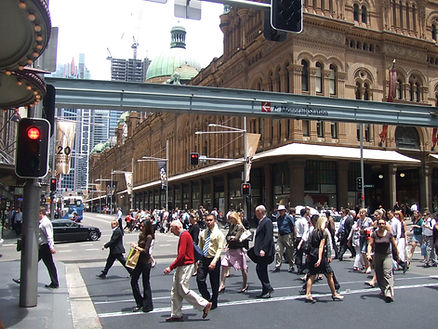
Today, cities house over 50% of global population with 1.5 million people joining that number each week by urbanizing.
It is estimated by PricewaterhouseCoopers, that roughly $8 trillion will have to be invested in infrastructure in Shanghai, London, Beijing and New York over the next 10 years, to match the growing urban population.

This is not just a problem for the cities mentioned above. Countries like China and India are adding 60,000 people to their urban population, each day. Rapid urbanization, if left unchecked, can lead to severe consequences, especially for LEDC's (Less Economically Developed Countries).
Scroll down to see the ramifications which countries face due to unplanned urbanization

CONGESTION AND TRAFFIC

Congested roads, incessant honking, lanes of traffic: all caused by rapid urbanization
One of the main problems which comes with migration from rural to urban areas, is an increase in traffic and road congestion. This can also be partly attributed to poor urban planning when it comes to the sizes of roads by local municipal authorities. However, one of the main causes of the issue of traffic is that of there being too many personal vehicles on the road and that of public transportation being crammed full by too many people using it.
Urbanization has its plus points: new jobs, more opportunities, etc. However, this means more workers, and these workers need transportation for daily purposes, not limited to going to the office. The increase in labour coming in through urbanization has resulted in an increase in the number of vehicles on the road in several cities. For example, in Mumbai, the number of vehicles on the road has increased by 55% in the last seven years, to a staggering 23.3 lakh vehicles.
When one takes into account that many of the roads in Mumbai and many major cities have not been altered since their original construction before the rise in the number of motorized vehicles, another aspect of the problem comes to light: the roads and lanes in many large cities are simply not wide enough to accommodate an increase in cars and other large vehicles.
This problem is illustrated best in Delhi, the capital of India. While road length or road space per car should ideally increase with an increase in cars, in Delhi the opposite has happened. Since 1971, road length per car has gone down from 3 km per car to less than 0.23 km per car. What's more, that number is expected to decrease even further while Delhi's vehicle population is expected to double by the year 2021, from any already staggering 44 lakh vehicles. That is indicative, if not anything else, of a major crisis waiting to unfold into an even larger one unless the right steps are taken to correct it.
Nighttime traffic
Courtesy of Wix Images
The above video features an excerpt from an interview with one of our teachers, Mr. Batjargl Batmunkh, who is talking about the traffic scenario in Ulan Bator, the capital of his native country, Mongolia.
(Make sure to turn the subtitles ON)

HEALTH AND POLLUTION

Poisonous fumes, spreading off contagious diseases and collapsing health care: all possible through rapid urbanization
The unplanned growth of cities can often result in its inhabitants experiencing severe health issues, as well as its environment suffering from the pollution caused by growth. This is not to say that urbanization itself can cause health problems. In fact, throughout the 19th and 20th century, immigrants found themselves moving to larger cities in search of better healthcare facilities, which were more equipped to deal with serious illnesses which required immediate attention and long-term treatment.
However, when a city grows rapidly and without the necessary planning to accompany the growth, it often results in a very high population density, which combined with poverty, can result in poor sanitation and the spread of diseases. This problem is a global issue, with over 700 million people living in urban areas lacking proper healthcare and sanitation. In sub-Saharan Africa, a region known for its stark poverty, over 62% of the urban population reside in slums. When so many people start living in slums, and that too in such small areas, it increases the chances for the spread of diseases such as Severe Acute Respiratory Syndrome, or SARS, something which can be deadly for children. Furthermore, illnesses like cholera can also spread throughout slums due to the lack of clean drinking water available.
Contagious diseases aren't the only problem. Another major issue is that of non-communicable diseases. Out of the 38 million people who die of such diseases, 85% of them are from developing countries. But one might ask, how are non-communicable diseases linked to rapid urbanization? Well, 7 million of the 38 million deaths are caused by respiratory problems caused by air pollution. Air pollution is something that can be linked back to the issue of uncontrolled growth of the number of vehicles in cities as well as new factories and homes which consume fossil fuels in order to run.
What further links air pollution to the problem of uncontrolled growth is that 90% of the harm is done by old and not-well-maintained cars which run on cheap and inferior fuel sources, thus contributing more to pollution. Since many of the migrants moving to cities come from rural areas, they are unable to afford high-end transport and resort to buying cheap vehicles which are poorly maintained and thus, are more polluting. Also, in India for example, many households in slums burn biomass fuels for heat instead of using mains electricity. If the burning is not carried out in the right way, it often leads to incomplete combustion and can cause the emission of poisonous gases such as carbon monoxide which can bind to human blood and prevent the passage of oxygen, thus causing non-communicable diseases which are extremely harmful.
A woman wearing a mask to avoid breathing in polluted air - Beijing, China